CALL US NOW

0431 - 2685227

Categories
OUR PROJECTS

EDUCATION

SEVAI – EDUCATION SECTOR

‘Real education has to draw out the best from the boys and girls to be educated. This can never be done by packing ill-assorted and unwanted information into the heads of the students. It becomes a dead weight crushing all originality in them and turning them into mere automata’ said -Mahatma Gandhi.

Mission Education is a comprehensive programme from SEVAI which focuses on basic education for underprivileged children and youth. SEVAI believes that whether you are addressing healthcare, poverty, population control, unemployment or human rights, there’s no better place to start than in the corridors of Education. Because education is both the means as well as the end to a better life: means, because it empowers an individual to earn his/her livelihood and the end because it increases one’s awareness on a range of issues – from healthcare to appropriate social behavior to understanding one’s rights.SEVAI believes that Good citizens are essential for the welfare of the Community. It is the duty of all of us to bring up child community to become such good citizens. For needy and disadvantaged children, it becomes the added duty of the society to take charge of them, give them shelter, love and affection, self-confidence and life-coping education. Without this support there is a risk that they will fall a prey to antisocial elements.

SEVAI has been focussed on the education and development of people from marginalized communities and has taken forward these priorities with renewed rigour based on basic principles and program strategies. The era of globalization and increasing awareness of rights has added new demands on the education system. Amidst global concerns and the drive for economic growth, the focus on children – their protection, well being and learning needs – are given top priority in SEVAI. SEVAI understands the complexity of our social and educational environment, with plural identities, languages and struggle for survival, and SEVAI works on empowerment such section of people not being deprived of basic rights and amenities.

The educational programs of SEVAI have a wide scope, and are based on basic principles such as. Child-centered education, People’s participation, particularly of women, Development of local leadership, Strengthening local infrastructure and services, The programs are being developed in a carefully developed time frame for a cumulative impact. The emphasis is on multiplying effective processes and nurturing institutions focussed on children and young people. SEVAI supports a series of projects related to access and quality of education across the country. A majority of the access projects involve bridge courses for out-of-school children and their enrolment in government or local schools.

SEVAI tracks the children are continuously tracked and supported to ensure that they do not drop out of school. The focus on education, Child protection and rehabilitation of children in distress, Systematic engagement with the community, Education for out-of-school children, with focus on girls, tribals, dalits and minorities, Child-centered pedagogy, Mainstreaming of children into government and other schools, Supplementary interventions to improve retention, SEVAI is flexible about supporting projects related to children. Collaborative programs with Government are encouraged to increase the impact and quality of programs.

The importance of quality along with access, child-centered learning, mother tongue as the medium of instruction and an overall enabling environment are key for motivating children and communities.SEVAI promotes a series of projects related to education and empowerment of adolescents and youth. SEVAI has always been committed to the task of community building, and have invested in creative and talented youth as agents of social change and development. Projects implemented by SEVAI have demonstrated the effectiveness of engaging with youth and women Self Help groups in developmental processes. Across the target areas, wherever young populations have been engaged with issues of public concern, the results have been dramatic. SEVAI creates opportunities for young people to realize their potential, both in terms of social leadership and entrepreneurship, and enable them to positively contribute to the development of their community. In this context, new strategies are also constantly evolved to create new opportunities for adolescents and youth.

SEVAI working with communities have achieved limited success in improving access to resources and livelihoods. However, their empowerment and sustainable livelihoods get limited in the absence of education. Education and literacy is becoming increasingly identified as the critical factor of development of communities – rural, urban poor, displaced, migrants, minorities, and thus SEVAI Considers that Education is a critical task for empowerment, as it can equip people to deal with the complexities of their environment on their own terms. Women who are struggling to survive need it as a tool to critically analyse problems and to seek solutions SEVAI realizes the importance of literacy particularly for women who are organized in Self Help Groups and has developed programs to extend learning opportunities to them. In strategic terms, the SEVAI realizes that resource groups and academic programs for professional education of trainers and educational managers are required to supplement field-based programs.

1. PRIMARY EDUCATION

‘PRIMARY EDUCATION is the key to progress, it empowers the individual, and it enables a nation’. There is a lot to learn from the Basic education system advocated by Mahatma Gandhi. The whole issue of relevance of education has been raised in the context of education for life. A lot of experts feel that education is not just the process of imparting literacy and numeracy.

SEVAI runs two primary schools and SEVAI Where each individual is afforded the opportunity for optimal growth, SEVAI Primary School sees this growth, in all its aspects, as an on- going process and SEVAI School administration:

  • Enables the pupils to express themselves clearly.
  • Encourages curiosity and independence of thought.
  • Provides an individualized programme according to his or her needs, ability and potential.
  • Challenges students to realize that potential.
  • Promotes physical development through a diverse athletics programme.
  • Encourages creative and cultural opportunities in an enriched fine arts programme.
  • In the primary School prepare individuals to cope with the complexities of a contemporary and rapidly changing society. SEVAI therefore:
  • Offers the opportunity to each student to attain fluency in at least one language other than her / his native tongue.
  • Promote a healthy lifestyle through an interest in lifetime sports and athletics, fostering team spirit and sportsmanship which will enable students to cope with the stresses of contemporary living.
  • Develop an open- minded attitude towards new technology.
  • Encourage the purposeful use of materials and techniques which will enhance the growth of the individual throughout life.

It is actually a process of socialization that helps children cope with the natural and the social environment. They have therefore, emphasized the need to develop a school system that builds on the solidarities in societies and tries to learn from the natural environment. The pursuit of useful and relevant education would imply a much greater focus on integrating physical and mental development.

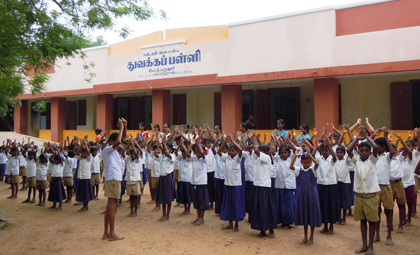
Mettumarudur Primary School

SEVAI strappingly believes that Education is important not only for the full development of one’s personality, but also for the sustained growth of the family. “The health, education and creative abilities of children will determine the well being and strength of a nation.

Pupils with dignity /giving full expression/ creativity in Primary schools

SEVAI team ensures quality of Education in SEVAI run primary schools and SEVAI team also works with the Government schools providing quality of education especially and for the Disadvantaged sections of the SEVAI target area particularly girls, Dalits, marginalized and (disabled), the differently abled.

SEVAI includes several features that seek to improve the quality of elementary education, ensuring basic provisioning to enable improvement in the quality of classroom transactions; (b) large scale capacity building of States, for undertaking interventions for quality enhancement; and (c) evaluation of quality related processes and assessment of learning outcomes. The expert group is to advise School teachers for the conduct of achievement study and to develop a Systemic Quality Index that helps SEVAI to interpret the result oriented outcomes of achievements.

SEVAI’s QUALITY MONITORING TOOLS – A continuous and comprehensive monitoring and supervision system has been developed by SEVAI in the form of quality monitoring tools are:(a)Children’s Attendance,(b) Community Support and Participation,(c)Teacher and Teacher Preparation,(d) Curriculum and Teaching Leaning Material,(e)Classroom Practices and Processes,(f) Learners’ Assessment, Monitoring and Supervision. The primary education provided in SEVAI is vertical in Development Gateway as an attempt to empower the children and teachers by providing ample resource materials to archive the goal of Elementary Education.SEVAI manages two Primary schools in Tamil medium in Mettu Marudur, in a a rural area and Bickchandar Koil,in an urban slum area.

Bichandar Koil Primary School with active learning with teaching aids.

  • Around for around 500 Pupils pursue their studies in these two schools run by SEVAI. In recent past, SEVAI has made a huge progress in terms of increasing primary education enrolment, retention, regular attendance rate in these two schools, the quality of elementary education, especially adopting Activity Based Learning methods.
  • In these SEVAI run schools, Primary Education includes the participatory ‘bottom up’ approach with transparency, and sustained monitoring school with the goal of educating all children as the best citizens of the Under this ABL method it is observed in SEVAI that these two schools where SEVAI actively involves that the Children learn on their own pace.
  • Provision of more time for self-directed learning and teacher directed learning is reduced considerably Group learning, mutual learning and self learning are promoted Teachers teaching time is judiciously distributed among children.
  • Only needy children are addressed by teachers Children’s participation in every step is ensured in the process of learning, Evaluation is inbuilt in the system it is done without the child knowing it.
  • In these two SEVAI run schools, it is observed that Reading and writing are individual activities, unless one is reading aloud for others to hear. Reading involves comprehending words. Reading also demands listening to what the writer wishes to communicate. Understanding means gathering relevant details and getting a sense of what one has read. Alertness and attentiveness demand that one understands whatever one is listening to, or reading, is another’s viewpoint. SEVAI teachers are intelligent and they are: open to lifelong learning, not just already learnt knowledge/ skills – not be tied to one way of looking at things, open to alternative solutions, willing to study, read, look at new seemingly unconnected information – capable of collaborative functioning – find the inner resources to listen to many views and respond – by seeking clarification, By rephrasing – by finding / articulating non-divisive questions for common engagement.

SEVAI Schools engage the primary school pupils intelligently in the knowledge age.

  • Able to see that all knowledge is limited
  • Be resourceful in and with the given context
  • Learn the other skills needed to make knowledge relevant
  • Be open to finding out the basic assumptions in what is being said, written, shown – ask questions, clarify
  • Feel free to ask if a view is factual and true, and under what circumstances

Enriching English language at the primary level :

English occupies a unique position in popular imagination. It is seen as a gateway to knowledge and is said to confer prestige and social distinction to anyone who learns to use it fluently. To enable all children to gain the advantages of this social phenomenon, it has been introduced conversational English in Class I itself in all these schools. In ABL methodology, English is introduced in Class I through conversation cards. However, learning to speak a second language involves some challenges. When children learn to speak their mother tongue, all their senses are actively engaged in the process. Learning to speak a second language in school does not replicate these natural processes and multi-sensory engagement.

Therefore, introduction of audio-visual technology in combination with print materials has been used to open out a host of opportunities for children to experience English in meaningful contexts. An audiovisual CD “Hello English” developed by Regional Institute of English was given to selected schools and children were exposed to it. Children watched the CD and then did activities suggested on it. Teachers and students were delighted with their programmes and they have begun to speak English without any psychological barrier.

Thanks for SSA for its innovative materials for Mathematics for classes’ I-IV have been enriched by the introduction of three-dimensional materials based on Montessori system.

There are 25 items such as Number Rods, Addition boards, Multiplication Cloth etc which concretize the basic arithmetic operations. Mid-day Meal Scheme involves provision of lunch free of cost to school-children on all working days.

The key objectives of the programme are: protecting children from classroom hunger, increasing school enrolment and attendance, improved socialisation among children, addressing malnutrition, and social empowerment through provision of employment to women. The success of this scheme is illustrated by the tremendous increase in the school participation and completion . The meals provided in SEVAI schools with Government support has Nutrition (also called nourishment) is the provision, to cells and organisms, of the materials to support life. Many common health problems are e prevented with this healthy diet.The diet of an organism is what it eats, and is largely determined by the perceived palatability of foods.

Details of associated services provided:

  • Supply of Nutritious Noon Meal
  • Supply of Free Slates for Standard 1.
  • Supply of Free Bus Pass for all students coming over to school.
  • Supply of Free Text Books for all students from Standard 1 to 5
  • Bridge course Non-formal Education for dropouts.
  • Open Schools those who completed 8th Standard.

2.SEVAI SHANTHI MATRICULATION HIGHER SECONDARY SCHOOL:

School pupils with full of freedom of self expression of creative thoughts……

The initiation of Shanthi School in Pettavaithalai has created great willingness and response among the villagers nearby towards sending their children to the School for getting education. The teachers promote the Children in the School with special attention in creative Education system. This integral formula multiple our aptitudes, adds our enthusiasm, subtracts our negligence, divides us from superiority complex.. Special Features of Creative Education System: The beginning of everyday is a smiling one for the children of Shanthi School, for school going. Around 1000 children hailing from the inerior rural villages are benefited by this school.

Group work and study also encouraged the children for the better quality of education. Specialized teachers imparts quality education focusing in-depth parts of the subjects and I methodology.

MORNING SCHOOL ASSEMBLY

The way of teaching and the other activities are designed for the new millenium children and the quality of the education has been updated every year towards periodic development. We are glad to inform you that this School has been recognized by the Government for conducting further 11th standard for the children to continue their higher studies. The students of Shanthi School achieved 100% result with first class marks in the Matriculation exam recognized by the Government. SEVAI Shanthi Matriculation Higher Secondary School is a unique educational institution in Trichirapalli District. It nurtures, in the minds of young children, all the values necessary for a successful and meaningful life. The aim of this humble institution is the accomplishment of the overall development of each child irrespective of its caste, creed or religion. SEVAI with the support of several well wishers and supporters founded this school, and it aims at providing quality education based on sound educational principles.

SEVAI undertakes Comprehensive developmental activities and as a part of its activities it had SEVAI Shanthi Matriculation Secondary School to provide quality education based on sound educational principles.

This SEVAI Shanthi Matriculation School achieved high quality of education and also human values and it has 100% pass every year with outstanding marks obtained in the Public Examination, Xth Standard. Our strong strength, our staff team are here dedicatedly working hard for the development of each and every student. This school has been elevated as higher secondary school from the year 2010, the strength increased to 1200 students and 43 staff members.

SEVAI Shanthi Higher Secondary School Courses: XI & XII Standard

  • Maths, Physics, Chemistry, Biology,
  • Maths, Physics, Chemistry, Computer Science, Accountancy,
  • Commerce, Economics, Computer Science

PARENTS’ TEACHERS MEET IN SCHOOL PREMISES

To that end this school is ecumenical in intention, international in perspective, caring in spirit, committed in action and dedicated to excellence as such,

  • The school reinforces the philosophy, mission and objectives of ” SEVAI Shanthi Matriculation Higher Secondary School “,
  • Promotes Academic excellence,
  • Enables each student to reach his or her potential in all dimensions.
  • The purpose of the higher sec. school Uniform Policy is to provide a regular appearance, and to assure adequate protection from the climate, consistent with school activity.
  • The uniform policy promotes the development of good personal grooming habits. The wearing of the school uniform is obligatory. All items should be marked with the student’s name.
  • Infrastructure Lab/Lib./computer facilities/eco-clubs
  • SEVAI Shanthi Matriculation Higher Secondary School is also a caring environment where students are encouraged to reach their full potential, prepared to think globally, with a commitment to justice and challenged to act responsibly in a consistently changing society.
  • SEVAI Shanthi Matriculation Higher Secondary School with a consistent track record for achieving the highest academic results.SEVAI Shanthi Matriculation Higher Secondary School has a comprehensive curriculum that is varied to cater for all students’ needs.
  • SEVAI Shanthi Matriculation Higher Secondary School has invested over the past 5 years in developing our campus, with the objective of giving our students the very best environment and facilities to work in. SEVAI Shanthi Matriculation Higher Secondary School has Visual and Performing Arts program and facility which is probably the best in Trichy today.
  • SEVAI Shanthi Matriculation Higher Secondary School Athletics program is regarded by many as one of the most comprehensive of any of the matriculation schools in Tamil Nadu and one that has seen significant success over the years.
  • SEVAI Shanthi Matriculation Higher Secondary School is also a caring environment where students are encouraged to reach their full potential, prepared to think globally, with a commitment to justice and challenged to act responsibly in a consistently changing society.
  • SEVAI Shanthi Matriculation Higher Secondary School with a consistent track record for achieving the highest academic results.SEVAI Shanthi Matriculation Higher Secondary School has a comprehensive curriculum that is varied to cater for all students’ needs.
  • SEVAI Shanthi Matriculation Higher Secondary School has invested over the past 5 years in developing our campus, with the objective of giving our students the very best environment and facilities to work in. SEVAI Shanthi Matriculation Higher Secondary School has Visual and Performing Arts program and facility which is probably the best in Trichy today.
  • SEVAI Shanthi Matriculation Higher Secondary School Athletics program is regarded by many as one of the most comprehensive of any of the matriculation schools in Tamil Nadu and one that has seen significant success over the years.

School Building

  • SEVAI Shanthi Matriculation Higher Secondary School provides plenty of opportunities for the all-around development of our pupils. This is done through various literary & cultural associations of our school. Activities like Scouts & Guides, Road Safety Patrol, Bull Bulls, Band, Cubs Sports activities, Dance, Music classes are conducted regularly.
  • SEVAI Shanthi Matriculation Higher Secondary School has Scouts & Guides troops to cultivate the habit of becoming good citizens and to improve the humanity of the country. It conducts a regular camp which helps to face the abnormal situation without the help of others. In camps various games are conducted which improves the physical & mental abilities of the children. It has been carried out by well trained teachers.
  • SEVAI Shanthi Matriculation Higher Secondary School has Road Safety Patrol troops.
  • Every day a group of students perform some functions outside the school campus. It helps the students to realize the disaster of the accidents and how they can prevent it.
  • First aids are taught to these students so that they can save many lives.
  • SEVAI Shanthi Matriculation Higher Secondary School yoga classes twice a week. It strengthens the mental ability of the children.
  • “True glory consists in doing and living to make the world happier and better for our living in it.”
  • Under the guidance of 2 teachers, 40 students take active role in awakening environmental awareness among people.
  • SEVAI School Pupils behave in a courteous and gentle manner on all occasions.
    • They address their teachers and all members of the staff with due respect and politeness. Good moral behavior and gentle ways are prerequisites of every student.
    • They always remember that the school is judged by their conduct. All Students strictly observe the rules of the school, attending of home work, regular attendance, moral behavior, disobedience, and respect towards the members of the staff.
    • Parents’ takes part and co-operate in the work of the school by enforcing regularity, punctuality and discipline and by taking a daily interest in their children’s progress.
    • They check the diary daily for any remarks and note the homework given. The parents also check the diaries regularly and note the teachers’ remark, etc., and acknowledge the same promptly by placing their signature against the remark.
    • Parents also see that their children study and do their homework regularly. Parents make their own arrangement whenever students are asked to come before / remain after school hours for various curricular and extra curricular activities. Whenever the parents are asked to meet the principal to discuss their son’s academic condition / any misbehavior, they meet the Principal without fail on the stipulated date specified in the circular letter sent by the school office.
    • Parents who seek information or who wish to make some complaint should do so to the Principal and not to the class teacher.
    • Parents, guardians or other persons are not allowed to meet the students or interview their teachers during school hours without permission of the Principal.
    • The members of the staff be met during their free periods or school recesses.

    School Teachers Welcome the Parents and Guests

    • Parents, when communicating with the principal, are requested to mention in their letter the class (standard) and division of their children.
    • Parents who wish to take their children out during the school hours should get the necessary written permission from the Principal by submitting a letter and stating the reason.
    • Parents should come in persons to take their children from the school
    • Normally school is a place where children are taught. The process of teaching differs from school to school depending on the ideals and philosophy of the schools.
    • A school that has futuristic approach knows the difference between teaching for marks and teaching for life.
    • SEVAI School has a judicious mixture of these both ingredients of education. A student of such a school has exciting experience of gathering more and more skills for his life.

    In SEVAI SHANTHI MATRICULATION HIGHER SECONDARY SCHOOL

    Students are exposed to the four basic skills for the success of life.

    1. Skill to take decisions in a short time,
    2. Skill to accept difficult situations,
    3. Skill to communicate what he has in mind to others effectively,
    4. Skill to work under pressure.

    SEVAI still keep their minds clear about the goal of education i.e to prepare the students entrusted to them to face the world boldly with justice, equality, liberty and fraternity. A school, which prepares their students only for the board examination will never achieve this end.

    3. SEVAI Vocational Education and Training (SVET).

    SEVAI Vocational education or Vocational Education and Training (VET)prepares Target area women and youth learners for jobs that are based in manual or practical activities, traditionally non-academic and totally related to a specific trade,

    The SEVAI vocational Educational Institute focuses on need based training on the basis on which young people acquire the skills needed for long-term employment, and provides people with the skills that the economy requires. SEVAI Vocational Educational Institute enhanced the following areas:

    1. Impact vocational skills, life skills and technical knowledge to neo-literates and their trainees and raise their efficiency and increase their productive ability;
    2. Organize equivalency programmes for its beneficiaries through Open Schools;
    3. Through Life Enrichment Education (LEE), wide the knowledge and understanding of the social, economic and political systems among its beneficiaries in order to create a critical awareness about the environment;
    4. Promote national goals such as secularism, national integration, women’s equality, protection and conservation of the environment.
    5. SEVAI Vocational Educational Institute offers need based vocational training programmes from candle making to computer courses with assured placements.

      • As vocational Education is both the means as well as the end to a better life: means, because it empowers an individual to earn his/her livelihood with employability skill, it increases one’s awareness on a range of issues –appropriate social behavior to understanding one’s rights – and in the process evolve as a better citizen. Vocational training in SEVAI is provided on a full time as well as part time basis.
      • Continuous, career-long learning provided in SEVAI Vocational Educational Institute new procedures and methods for occupational education.
      • The area of “media and methods” develops strategies to promote selforganised in SEVAI Vocational Educational Institute learning, analyses procedures and methods of workplace learning, in particular the potential for development, and other modes of learning.
      • It also investigates the ways in which informally acquired skills can be certified, including from the perspective of the Internationalization of vocational training.
      • SEVAI has promoted an Institute for Continuing Education as Life long learning on the concept ‚’Fit for Job and Fit for Life’ as Continued and Lifelong learning has become a necessity in today’s dynamic information society.
      • Sevai Institute for Continuing Education has been approved by Universities as their learning centres for persusing job oriented courses and this means that new occupational training structures and new learning methods are developed for both classroom and week-end -classroom settings.
      • A variety of courses open to the target area of SEVAI are offered throughout the year by Continuing Education. Courses are held on Allur and Nagapatinam, Karaikal campuses. Courses are offered not only at working days but also during week ends. SEVAI programs are designed to provide the skills necessary to acquire professional level positions for many in-demand occupations.
      • SEVAI currently offers certificate programs in the areas of addressing the following community needs: Self-Enrichment, Vocational, and Lifelong Learning: Art, Health, Agriculture and Non-farm Activities and Special Interest, Healthcare and Fitness, Helpers of the Hospitals and Nursing Homes, Early Childhood Education, Enterprise Management, Management of Firms and accountancy, Self Help Groups Managements,Bio farming and horticulture, Skilled Trades.
      • SEVAI understnands that the need for learning is on the rise, but diagnosing the nature and scope of this need is becoming increasingly difficult. Although it is sometimes said nowadays that each individual must take greater responsibility for their own employability, the task of ensuring that a society’s workforce has the necessary skills cannot be left to individual assessments or to natural development of an inherent learning culture.
      • Hence, SEVAI’s “continuing education” focuses on the upradation of continuing learning opportunities, particularly concerning the integration of learning into everyday work duties and processes, and the various stages of employees’ career paths.
      • SEVAI’s study in Trichy ubran areas reveals that many enterprises are seeking to pay more attention to the qualification and development of their staff – not least given the increasing shortage of suitable workers. SEVAI had identified that Small and medium-sized firms in particular require flexible approaches to qualifications, which take into account limited personnel, time and financial resources and allow firm-specific approaches. In Trichy alone 35000 jobs are available but they do not have employable youth. The unemployed youth are given training to be employable in SEVAI,Allur,Naapattinam and other potental locations.
      • SEVAI Institute for Continuing Education has understood well that Continuing Education plays an increasingly important role in the future for individuals, society and the economy and the importance of educational support by SEVAI lies in the contribution which it can make to the systematic orientation of continuing education.
      • SEVAI analyses processes, structures and institutions and University’s Efficiency at ways to shape Continuing education training in an efficient and effective way. Today, Continuing Education has emerged as an important source of employment.SEVAI has taken many significant initiatives to popularize continuing vocational education quality training.

    4. NON –FORMAL EDUCATION FOR SCHOOL DROP-OUTS:

    SEVAI implemented this project Non-formal Education Programme covers more underprivileged children from rural areas for 1500 children in early 2000. Classes IV and V have already been added in this project with proper teachers and extracurricular activities.

    Non-Formal vocational Education Institute for School Dropouts

    • Along with educational support, health care is integrated in the project. Regular health check-up and growth monitoring is ensured for the children. Keeping in mind the children’s nutritional need and support, all the children get balanced mid-day meal at the centre.
    • The special components of the project are that 50% of the children get NFE [Non-formal Education], who are either non–school going or school dropouts. Health checkup of all children enrolled and their growth is monitored.
    • Teachers maintain a homely environment with the students so that they will love coming to the school, Monitoring of the children once they are mainstreamed to formal schools, Regular health check-up, growth monitoring as well as nutritional support are ensured, SEVAI had vowed to make the integrated programme a showcase project for empowering the society by providing education to children from the underprivileged section.
    • SEVAI experienced that Learning is not restricted to the time spent in school. However, ongoing learning throughout life enables people to take advantage of new opportunities that arise as society changes.
    • It also provides opportunities for those who are unemployed to re-enter the workforce. Every kind of learning that happens outside the traditional school setting is called non-formal. However, SEVAI sees non-formal education as an educational movement, a setting, a process and a system. The projects and programmes implemented by SEVAI under the label of ‘non-formal education’ are very diverse in scope.
    • What usually has in common is an organised, systematic, educational activity, carried on outside the framework of the formal education system, to provide different types of learning to particular groups in the population, both adults and children. Thus non-formal education is different from the institutionalised, chronologically graded and hierarchically structured nature of the formal education system.
    • SEVAI views that Education is the power which can transform lives. Children born to underprivileged parents do not mean they can’t excel and we being elder just need to hold their hands a bit.We love our children and they love us. It is this bond between us that will ensure a bright future for these underprivileged children and a sense of purpose for SEVAI, without support from good hearts, it would have been impossible to grow and reach where we are today.

    Children Born to Underprivileged Can Also Excel and We to Hold Their Hands a Bit

    SEVAI incorporated a project component titled “Empowering Adolescents through Life Skills Education”. The project follows Life Skills Education strategy, which is a comprehensive behaviour change approach that concentrates on the development of the skills needed for life such as communication, decision making, thinking, managing emotions, assertiveness, resisting peer pressure etc.

    Categories
    OUR PROJECTS

    Shanti school

    Categories
    OUR PROJECTS

    WATERSHED

    Watershed Projects. Thottiyapatty/Dasilnaikanoor/Kakayampaty Making Running water Walk’

    Watershed Location Map

    SEVAI Founder, K.Govindaraju, started his mission with villagers’ interaction in interior villages, Lead a team of gradates and undertook a research study on Rural Cumulative Poverty in 412 villages in Tamilnadu in 1975 and a report was brought out on findings. A monograph had been brought out under the technical support of the Administrative Staff College; Hyderabad for assessing the cumulative poverty hit villages and selected poorest of the poor villages and initiated development intervention based on the study.

    Interaction With Community And Baseline Survey

    View of Thottiyapatty before Watershed / PRA Process

    The objectives of SEVAI are employment, environment, and enlightenment. The SEVAI believes that the village as a human settlement, a socio-economic entity, with an identity and history of its own, which has grown as a result of interaction with a particular eco system, should not only survive in modern society, but also should grow in strength. ‘Watershed development has been conceived basically as a strategy for protecting the livelihoods of the people inhabiting the fragile ecosystems experiencing soil erosion and moisture stress”. Man and his environment are interdependent.

    The changes in the environment directly affect the lives of the people depending on it. A degraded environment means a degraded quality of life of the people. Environmental degradation can be tackled effectively through the holistic development of the watershed. A watershed provides a natural geo- hydrological unit for planning any developmental initiative.

    Watershed development and management implies an integration of technologies within the natural boundary of a drainage area for optimum development of land, water and plant resources, to meet the people’s basic needs in a sustained manner.

    This watershed is an area from which runoff resulting from precipitation flows past a single point into a large stream, river, lake/ pond. Each watershed is an independent hydrological unit. It has become an acceptable unit of planning for optimum use and conservation of soil and water resources.

    The concept of integrated watershed development refers to the development and management of the resources in the watershed to achieve higher sustainable production without deterioration in the resource base and any ecological imbalances.

    This concept requires the formulation and implementation of a package of programmes with activities for optimum resource use in the watershed without adversely affecting the soil and water base or life supporting system.

    The concept assumes more importance in the context of planning for sustained development.

    Watershed development aims at preventing watershed degradation resulting from the interaction of physiographic features. It eliminates unscientific land use, inappropriate cropping patterns and soil erosion, thereby improving and sustaining productivity of resources leading to higher income and living standards for the inhabitants in the watershed area.

    It therefore involves restoration of the ecosystem, protecting and utilizing the locally available resources within a watershed to achieve sustainable development.

    Rainfall failure occurs once every 3 to 5 years and is usually below 50% of the average annual rainfall of the region. During periods of rainfall failure, the groundwater level lowers since fluctuations in the water table levels depend on the rainfall when both surface and groundwater availability becomes critical.

    Drought begins to prevail and there is difficult to cope up with the water demand during this period. Similarly, in some locations or areas water shortage is observed just before the rainy season commences. These two situations can be managed if suitable soil and moisture conservation measures are systematically implemented on a small watershed basis. • There are always strong links between soil conservation and water conservation measures. Many actions are directed primarily to one or the other, but most contain an element of both. Reduction of surface runoff can be achieved by constructing suitable structures or by changes in land management.

    Further, this reduction of surface runoff will increase infiltration and help in water conservation. Water/soil conservation process.

    Watershed is defined as a geohydrological unit draining to a common point by a system of drains. All lands on earth are part of one watershed or other. Watershed is thus the land and water area, which contributes runoff to a common point. Water is essential for all life and is used in many different ways – for food production, drinking and domestic uses. It is also part of the larger ecosystem on which bio diversity depends.

    • Precipitation, converted to soil and groundwater and thus accessible to vegetation and people, is the dominant pre-condition for biomass production and social development in dry lands.
    • The amount of available water is equivalent to the water moving through the landscape. It also fluctuates between the wet and dry periods.
    • Irrigation potential which exists in Tamilnadu is much more than the presently irrigated area for food security.
    • A variety of essential soil moisture and water conservation technologies adopted to reduce the cost of irrigation, extend it throughout and promote sustainable small-scale irrigation on a watershed basis in the PVF supported watersheds will be documented.
    • Watershed technologies are essential especially in drought-prone areas. Even though drought is a purely natural calamity caused by the failure of (monsoon) rain, it can be minimized by careful planning and operation.
    • During good rainy years, excess rainwater should be stored in the soil and also underground using suitable soil moisture conservation measures and water harvesting structures on a watershed basis. This stored water can subsequently be used for irrigation.

    The word watershed refers to a “contiguous area draining into a single water body or a water course” or “it is a topographical area having a common drainage”. This means that the rainwater falling on an area coming within a ridgeline can be harvested and will flow out of this area thorough single point. The term watershed development encompasses additional dimensions like equity, sustainability, gender and peoples participation. It has become a trusted tool for the overall development of the village and people living within a watershed area.

    Objectives of watershed management implemented in SEVAI in Dasilnaickanoor/Thottiyapatty/Kakayampatty cluster.

    The different objectives of watershed management programmes achieved are:

    1. To control damaging runoff and degradation and thereby conservation of soil and water.
    2. To manage and utilize the runoff water for useful purpose.
    3. To protect, conserve and improve the land of watershed for more efficient and sustained production.
    4. To protect and enhance the water resource originating in the watershed.
    5. To check soil erosion and to reduce the effect of sediment yield on the watershed.
    6. To rehabilitate the deteriorating lands.
    7. To moderate the floods peaks at down stream areas.
    8. To increase infiltration of rainwater.
    9. To improve and increase the production of timbers, fodder and wild life resource.
    10. To enhance the ground water recharge, wherever applicable
    • Actualize the vast untapped growth potential of Indian agriculture
    • Strengthened rural infrastructure to support faster agricultural development
    • Promoted value addition, accelerate the growth of agro enterprises among self help groups
    • Created employment in rural areas
    • Secured a fair standard of living for all agriculturalists and SHGs
    • Discouraged migration to urban areas and face the challenges arising out of economic liberalization and globalisation.
    • Resource mobilisation for sustainablity such as soil, farm equipment, loans and packages of practice of different crops.
    • Improvement of the Quality soil is one of the most important farming inputs.
    • High yields and good produce can be achieved only when the right type of soil is used for a certain crop.
    • Agriculturalists / individual entrepreneurs -setting up of small dairy farms for milk production.
    • Popularization of new technologies/tools/techniques for commercialization/ adoption.
    • Introduction of new concepts to improve farming systems.
    • Upgradation of skills by exchange of technical know-how.
    • Development of agriculture and allied sectors by better farming practices and cropping patterns, judicious use of water by introducing drip irrigation system, yield enhancement etc. as a result the village where nearly three- fourth population was below poverty line, has become self sufficient and is surplus in food grains, today.
    • Development of managerial skills and capability among people with low level of education, exposure and training.
    • Enough scope for women for self development.
    • An appreciable change in the attitude of the people with high degree of moral standards and ethics.
    • Over all improvement in the quality of life of the people, and conservation and use of the natural resources in a very sustainable manner.

    The broad range of initial community mobilization and organization activities is as follows:

    • Conducting formal and informal meeting among the watershed community
    • Conducting awareness campaign through audio visual aids and folk songs and theatre
    • Preparation of audio visual aids for the awareness campaigns
    • Conducting Benchmark and Socio-economic Surveys to obtain baseline data
    • Conducting Participatory Rural Appraisals (PRAs) in all three selected watersheds
    • Capacity Building activities imparting training in technical, managerial, financial areas
    • Formation of Watershed Association and Committees
    • Formation of User Groups
    • Facilitation for preparation of participatory Perspective Watershed Development Plan
    • Conducting managerial and technical training to the established local level institutions
    • Formation and development of Self Help Groups
    • Conducting Participatory Evaluation based on established Performance Indicators
    • Facilitating post-project management and sustainable project activities.
    • Training in community mobilization and agriculture

    Watershed management practices

    1. Interms of purpose
    2. To increase infiltration
    3. To increase water holding capacity
    4. To prevent soil erosion
    5. Method and accomplishment
      1. Increasing House Hold Income
      2. Improving Agriculture Productivity.
      3. Improving Vegetative Cover.
      4. Increasing Milk and Horticulture Production.
      5. Increasing Fodder and Fuel availability.
      6. Reducing Soil Erosion & Runoff to Improve Water Availability.
      7. Enhancing Quality and Life of Village Communities.
      8. Use of land, water and vegetation according to its capability we can changes in knowledge, skills, attitudes for enhancing resource use efficiency and improvement in socio-economic and ecological conditions

    In brief various control measures undertaken by SEVAI are:

    1. Vegetative measures & Strip cropping
    2. Pasture cropping
    3. Grass land farming
    4. Wood lands
    5. Engineering measures
    6. Contour bunding
    7. Terracing
    8. Construction of earthen embankment
    9. Construction of check dams
    10. Construction of farm ponds
    11. Construction of diversion
    12. Gully controlling structure
    13. Rock dam
    14. Establishment of permanent grass and vegetation
    15. Providing vegetative and stone barriers
    16. Construction of silt tanks dentension Influence of soil conservation measures and vegetation cover on erosion, Runoff and Nutrient loss.
    17. Rainwater harvesting is the main component of watershed management.

    SEVAI has completed the following RWH projects in three watersheds:

    • 12 check dams
    • 21 percolation tanks
    • 118 farm ponds
    • 218 gullies repaired
    • 15 underground tanks.

    Watershed impact of three watersheds:

    • Actualize the vast untapped growth potential of Indian agriculture
    • Strengthened rural infrastructure to support faster agricultural development
    • Promoted value addition, accelerate the growth of agro enterprises among self help groups
    • Created employment in rural areas
    • Secured a fair standard of living for all agriculturalists and SHGs
    • Discouraged migration to urban areas and face the challenges arising out of economic liberalization and globalisation.
    • Resource mobilisation for sustainablity such as soil, farm equipment, loans and packages of practice of different crops.
    • Improvement of the Quality soil is one of the most important farming inputs. High yields and good produce can be achieved only when the right type of soil is used for a certain crop.
    • Agriculturalists / individual entrepreneurs -setting up of small dairy farms for milk production.
    • Popularization of new technologies/tools/techniques for commercialization/ adoption.
    • Introduction of new concepts to improve farming systems.
    • Upgradation of skills by exchange of technical know-how.
    • Development of agriculture and allied sectors by better farming practices and cropping patterns, judicious use of water by introducing drip irrigation system, yield enhancement etc. as a result the village where nearly three- fourth population was below poverty line, has become self sufficient and is surplus in food grains, today.
    • Development of managerial skills and capability among people with low level of education, exposure and training.
    • Enough scope for women for self development.
    • An appreciable change in the attitude of the people with high degree of moral standards and ethics.

    Improved Economy with Gender Perspective

    • Rain Water Harvesting through open wells, development of small water harvesting structures as low – cost farm ponds, nullah bunds, check dams, percolation tanks.
    • The impact of such activities is a reduction in runoff rain water in open fields, increase in water level, increase in area under cultivation and curbing of top soil erosion.
    • Renovation and de-silting of tanks / ponds, augmentation of water sources. This has resulted in filling irrigation gap, increase in water storage capacity, dry land cultivation being brought under wet land cultivation, conversion from single crop area to double crop area, increase in water in nearby wells and in tank itself (2-3 times) Social forestry and orchard plantations. While afforestration has lead to increase in green cover and improvement in the ecosystem, the planting of orchards has brought more wastelands under plantation with an increase in intercrop area.
    • The most significant advantage is the appreciation of land value under herbal cultivation. Land development and reclamation including in-situ soil and moisture conservation measures. Principally activities undertaken include reclamation of degraded and undulated wastelands to level land through land leveling thereby brought under cultivation with earthen bunding on sides.
    • This has controlled soil erosion, lead to increase in moisture retention capacity, increased wasteland brought under cultivation, conversion of dry land to wet land, increase in production and subsequent increase in land value indicating increase in income. Minor / Major / diversion check dams and stone bunding structures.
    • These minor civil structures mode of locally available materials helps in arresting top soil erosion as they are laid in slopes with over 10 percent gradient. As a result of such measures, there is increase in moisture retention in catchments areas, increase in production, conversion of wasteland into cultivable land and additional vegetative cover.

    Executive Summary of the watershed Thottiyapatty/Dasilnaickanoor and Kakayampatty.

    • A watershed 412 ha in three micro watersheds 25 km south of Kulitalai in Manaparai Road, in Karur District, Tamilnadu.

    Problem

  • Low erratic rainfall averaging 700 mm per year, and recurrent droughts;
  • Soil erosion resulting in a reduction of cultivable land and the abandonment of severely eroded areas;
  • Infertile sandy soils with very low water retention and storage capacity;
  • Reduction in plot sizes due to land allocations to the homeless, population growth and inheritance laws;
  • Low crop yields and frequent failure due to drought;
  • Degraded communal grazing land due to overstocking;
  • Lowered water table because of over-exploitation;
  • Acute scarcity of fodder and fuelwood;
  • Seasonal migration of human and livestock populations;
  • Change from mix cropping to single crop system.
  • Intervention

    • Introducing the management of natural resources – soil, water, vegetation and animals for increased production through an integrated sustainable production system over the whole watershed;
    • Field testing of nationally developed dryland farming technologies;
    • Increasing awareness among rural people to encourage participation in the new system.

    Achievements

    • Land protection using multi- purpose shelter belts against wind and water erosion;
    • Reclamation of 120 ha of wasteland through gully stopping;
    • Improved and sustainable source of fuel wood from shelterbelt pruning;
    • Increased yields from intercropping drought-tolerant high yielding crops with fast- growing, multi-purpose trees;
    • Increased acreages (3-4 times) of irrigated commercial crops and double cropping because of improved water harvesting;
    • Improved dairy output resultant on increased fodder availability;
    • Higher incomes through produce, sales and employment opportunities – poverty alleviation;
    • Improved housing, access to education, nutrition and health.;
    • Improved vegetation cover and biodiversity. overall achievements
    • A rise in groundwater level;
    • Recognition of the value of the integrated management of natural resources widely recognized by government ministries with the consequent policy that dry land areas be based on watershed-based integrated management.;
    Categories
    OUR PROJECTS

    AGRICULTURE

    SEVAI-AGRICULTURE

    Tiruchirapalli district in Tamilnadu in India comes under three agro climatic zones viz.,Sub zone II ­ North ­ western zone, and Sub zone IV ­ Cauvery Delta zone and, Sub zone V ­ Southern zone. The Irrigated dry crops are -Sunflower, millets clayey soils with rice, banana and sugarcane are major crops such as, Rainfed crop millets. Promoting agricultural development through systematic extension work has been the role that SEVAI has been playing all along since its inception.

    It was agriculture that initiated civilisations, universalised permanent settlements, fed the mushrooming cities of the ancient empires and fuelled the literary heritage of human civilisation. Even today, agriculture remains the primary occupation of the majority of the human race. The rural India still lives on agricultural and allied activities.

    In Tamil Nadu, even after intensive industrialisation and urban migration, two thirds of the total workforce is still engaged in agricultural and related activities. Human welfare, especially welfare of the common folk, has to be based upon the welfare of the agriculturist and the agricultural labourer.

    “Agriculture and forestry together make a very vital and priority sector in SEVAI. Wastelands are found in dry belt villages. The SEVAI trains the youth and villagers to develop these lands and make them viable for cultivation. We also raise nurseries in our villages and grow different varieties of plants, shade, timber and fencing plants. SEVAI trains the villagers and youth in raising plants during the rainy season, and distribute the saplings in villages as per their requirement. After distribution and plantation, we also impart training to them for taking care of the plants in activities like fencing, mulching, watering trimming etc. 3 watersheds, two command areas, Desalination of tsunami water in 1000 acres and 500 acres organic farming are some of the significant.

    • In early eighties SEVAI took up the program for improvement of Agriculture and imparting skills to the farmers for better production and qualitative yield. During the same time program of digging the wells was taken up. The farmers who had water facility for agriculture were given seeds, pesticides and fertilizers.
    • The said program accompanied with trainings, on job supervision and on field learning facilities to the farmers. 426 farmers took the benefit of the said program. Altogether 5 villages participated in the program. The area coverage was 1235 ha of land under cultivation.
    • Program for digging wells and ground water investigation was one of the programs, which was executed in this period. With regard to agriculture development program SEVAI took up number of activities in regenerating the agricultural activities such as providing seeds, Fertilizers, Pesticides, Implements, Trainings regarding soil treatments, ways of water harvesting and recharging, de silting of wells & ponds, etc.
    • During the same time the program for dry land farming was designed considering the need of time.
    • The watershed concept emerged and SEVAI stopped its conventional well deepening program and undertook watershed projects in three major locations.
    • Consequently, SEVAI in consultations of AFPRO undertook Watershed Program as comprehensive project of Agriculture Development program. The agriculture extension program through watershed approach was focused upon promotion of Organic Farming, Micro Irrigation Systems, Crop Demonstrations, Vermi-Composting, Integrated Pest Management, Integrated Crop Management, Crop Planning & Management, Dry land techniques, improved Agricultural technologies, Livestock Management etc.
    • Bio- farming system in SEVAI is not new and is being followed from ancient time. It is a method of farming system which primarily aimed at cultivating the land and raising crops in such a way, as to keep the soil alive and in good health by use of organic wastes (crop, animal and farm wastes, aquatic wastes) and other biological materials along with beneficial microbes (biofertilizers) to release nutrients to crops for increased sustainable production in an eco friendly pollution free environment.
    • “Bio- farming is a system which avoids or largely excludes the use of synthetic inputs (such as fertilizers, pesticides, hormones, feed additives etc) and to the maximum extent feasible rely upon crop rotations, crop residues, animal manures, off-farm organic waste, mineral grade rock additives and biological system of nutrient mobilization and plant protection”.
    • SEVAI Promotes “Bio- agriculture is a unique production management system which promotes and enhances agro-ecosystem health, including biodiversity, biological cycles and soil biological activity, and this is accomplished by using on-farm agronomic, biological and mechanical methods in exclusion of all synthetic off-farm inputs”.
    • SEVAI also promotes the application of green leaves and twigs of trees, shrubs and herbs collected from elsewhere are known as green leaf manuring.
    • Forest tree leaves are the main sources for green leaf manure. Plants growing in wastelands, field bunds etc., are another source of green leaf manure.
    • SEVAI has undertaken 500 hundred acres for Bio-dynamics agriculture which refers to the agriculture science that recognizes basic principles at work in nature and applies this knowledge of life forces to bring about balance and healing in the soil. In other words, it recognizes the biological value in the soil, as well as, the chemical values – hence, bio-dynamic agriculture.
    • It is a method of farming adopted in SEVAI that aims to treat the farm as a living system which interacts with the environment, to build healthy living soil, and to produce food that nourishes and vitalises and helps to develop humanity.
    • SEVAI team works the health of soil, plants and animals depends on reconnecting nature with the creative forces of the cosmos. Bio-dynamic methods produce a living soil with increased biological activity, in alignment with planetary cosmic rhythms, particularly those of the sun, moon and planets in the fixed constellations.
    • Cosmic energies can work strongly through a living soil down into the plant. The coordinated working together of earthly and cosmic energies is what brings about healthy and nutritious plants.
    • Thus Bio-dynamics is a complete holistic outlook on agriculture being implemented in SEVAI.

    Bio-compost

    • Composting is the process of converting all biodegradable into organic manure. In SEVAI, we gained experience in promoting this bio-compost farming, in composting process certain input should be made into waste to convert the process in a short time.
    • SEVAI realizes the major input in the compost process is microbial inoculant for composting… The promising microbes are Pleurotus, Trichoderma, Bacillus, Pseudomonas and Streptomyces. In SEVAI, microbial consortia contains several promising microns are blended in a lignite based material and being sold as biomineralizer.
    • SEVAI’s Application of biomineralizer to the waste material quickly accelerates the composting process. SEVAI understands the importance of Cow dung as the other important input for composting as Cow-dung is the source of nitrogen as well as microorganism.

    Vermicompost Technology promoted by SEVAI.

    • SEVAI has promoted 2 vermi compost yards and produce the vermi composts and use it for agriculture land for food production.
    • Vermicompost technology is converting all biodegradable waste into nutrient rich organic manure with the help of composting earthworm.
    • Earthworms are efficient in digesting the waste and get as vermicompost which contains high amount of nutrients, beneficial microorganism viz., Azotobacter, Azospirillum and Phosphobacteria, growth promoting substances viz., indole acetic acid and gibberelic acid. Vermicompost contains 1.5 % nitrogen, 0.5 % phosphorus and 0.8 % potassium in addition it contains other micronutrients. Vermicompost is the single source of all the nutrients required for the crop.
    • Vermicompost also contains 10 % organic carbon and when continuous application of vermicompost increased the organic matter content of soil significantly.SEVAI uses this vermi compost in two main centres and produce, rice, banana, greens, vegitbles and sugarcane.SEVAI with enhanced the agricultural productivity with a natural touch, made available by the Best Agro Organics.
    • With producing practices, SEVAI has opened the gateway to quality Natural Fertilizers. A perfect blend of value and reliability, the Natural Fertilizers are ideal to increase the yield. We are well reckoned as one of the producers of Natural Vermicompost fertilizers producers and suppliers to the farmers of Sirugamani area.

    Main Nutrients of our Organic Fertilizer:

    • SEVAI produces the Organic Fertilizer contains natural phosphorus biocalcium Nitrogen, Potash, Phosphorus and Calcium.
    • It is an effective fertilizer, which has almost 16 types of the trace elements for the crop growth and yield. Since, it has the beneficial bacteria like Rhyzobium; it fixes the atmospheric nitrogen in soil. It is made by mixing of organic Component like decomposed Organic matter, bone meal and effective micro organisms.
    • Food produced organically has always commanded a higher price than conventionally produced food. The organic fertilizer produced in SEVAI is suitable for almost all the crops and increases the yield in high quality.
    • Our forefathers under traditional agricultural system were using only plant and animal wastes as manure.
    • Over the years, due to adoption of soil fertility management practices involving exclusively inorganic fertilizer, it become hazardous in the long run depleting the soil fertilities, distorting the soil health and declining the quality of the agricultural produces.
    • This is the right time to choose the organic manure for sustainable agriculture.

    Training provided in SEVAI for SHGs /farmers.

    • SEVAI periodically trainings the SHGs and also the farmers in Organic farming Principles, Concept , Components, Bio input production of organic farming,
    • Soil fertility management, Use of natural resources. Organic crop production technologies, Low cost input management, Organic methods of pest and disease management with Panchakavya.
    • With the increase in population SEVAI understands the compulsion would be not only to stabilize agricultural production but to increase it further in sustainable manner, thus, a natural balance needs are maintained for existence of life and property.

    THE KEY CHARACTERISTICS OF ORGANIC FARMING PROMOTED BY SEVAI INCLUDE

    • Protecting the long term fertility of soils by maintaining organic matter levels, encouraging soil biological activity, and careful mechanical intervention;
    • Providing crop nutrients indirectly using relatively insoluble nutrient sources which are made available to the plant by the action of soil micro-organisms;
    • Nitrogen self-sufficiency through the use of legumes and biological nitrogen fixation, as well as effective recycling of organic materials including crop residues and livestock manures;
    • The extensive management of livestock, paying full regard to their evolutionary adaptations, behavioural needs and animal welfare issues with respect to nutrition, housing, health, breeding and rearing;
    • Careful attention to the impact of the farming system on the wider environment and the conservation of wildlife and natural habitats.

    Integrated Farming as planned by SEVAI:

    • The farmers concentrate mainly on crop production which is subjected to a high degree of uncertainty in income and employment to the farmers. In this contest, it is imperative to evolve suitable strategy for augmenting the income of a farm.
    • Integration of various agricultural enterprises viz., cropping, animal husbandry, fishery, forestry etc. have great potentialities in the agricultural economy.
    • These enterprises not only supplement the income of the farmers but also help in increasing the family labour employment.
    • The integrated farming system approach introduces a change in the farming
    • Techniques for maximum production in the cropping pattern and take care of optimal utilization of resources.
    • The farm wastes are better recycled for productive purposes in this system.
    • A judicious mix of agricultural enterprises like dairy, poultry, piggery, fishery, agriculture etc. suited to the given agro-climatic conditions and socioeconomic status of the farmers would bring prosperity in the farming.
    • SEVAI provides agriculture training and extension services to target area farmers including demonstrations and trails, farmers and women’s field days, exchange visits, farmer’s trainings, participatory evaluation and planning etc. for enhancing agriculture productivity & income from irrigated agriculture.
    • Presently, More than 500 farmers are being benefited from these services.
    • Agriculture project promoted by SEVAI reduces the poverty and improve the economic growth through improved food production and security at household level on sustainable food availability, food access and food utilization in targeted areas. The main approaches are being used in SEVAI is:
    • To provide motivated farmers with the knowledge and the means to improve the net value of their agricultural activity,
    • To concentrate on deprived families (acute malnutrition being used as a proxy for poverty) to improve the nutritional status of their children and help them with a close follow up to strengthen and diversify their agricultural production.
    • To empower local organisations, women groups and committees whose activity helps sustain the progress momentum reached with the main target groups. SEVAI undertakes agriculture projects for the Increased smallholder agricultural productivity and diversified crop production
    • Restored soil fertility with a sustainable use of natural resources and the promotion of better land husbandry practices,
    • Additional income generation at household level through small animal husbandry,
    • Horticultural and gardening activities,
    • Reduced vulnerability of poorest households,
    • Capacity of the local SHG/farmer organization/groups (involved in reinforcing food Security)
    • SEVAI realizes that Agriculture is the backbone of our economy; therefore, SEVAI provides vocational education in agriculture and allied fields at the pre and post-matriculate level to cater to the training needs of a large number of boys and girls coming from rural areas.

    Activities of SEVAI are:

    Organizing need based vocational training programmes in agriculture and allied fields for farmers, farmer women, rural youth and school dropouts and to conduct on farm testing in crop production, horticulture, live stock, etc.

    Land Reclamation works undertaken by SEVAI in Tsunami affected Karaikal

    In the aftermath of tsunami, SEVAI, decided to assist people to reclaim the lands through the use of organic methods. The activities of the organization were successful in the reclamation of more than 1000 acres of land through the application organic based approaches in 12 villages, desalination of 24 ponds, desilting of 9 km of drainage canals influencing the reclamation process of agricultural lands in Karaikal Region.

    • In Nagapattinam/Karaikal most families own less than 2.0 hectares of land. A handful of farmers in each village own more than 4.0 hectares of land.
    • SEVAI was quick to rise to the occasion and worked with the district coordination centre in assessing the damaged lands, it took up Kottucherry commune in Karaikal to demonstrate the effects of organic reclamation work which proved to be successful and in influencing the others in the district to adopt the same approach.
    • The activities included removal of the clay/sand deposit by ploughing, constructing trenches along the bunds to facilitate lateral leaching of salts, the planting of green manure and the application of compost.
    • The organization was instrumental in teaching and training of farmers’ vermicomposting techniques and helped to establish vermicomposting units. Trainings to farmers in organic methods of reclamation, vermicomposting and farming helped in capacity building of farmers.
    • SEVAI continued with its work and in the short term is planning to train 400 labourers to take up economic – on farm activities nursery raising; grafting and layering; compost and vermicompost preparation and selling of bioinputs; value-adding of farm products.
    • SEVAI working in the agriculture sector in tsunami affected Karaikal areas found that land reclamation and revitalisation of agricultural operations were the priorities.
    • Sea water encroaching on agricultural fields and water channels had destroyed the standing crop.
    • Water bodies like ponds were salinated. It was also found that while the pH of the soil had not changed considerably, the electric conductivity had increased considerably in certain places.
    • This had an adverse effect on the desalination process. Further, because the carbon content had dropped, there were no living micro-organisms present in the soil. In places, there is high accumulation of sand and silt with sand deposits up to 3 feet. The high level of salt content rendered fertilisers ineffective.
    • The immediate tasks undertaken by SEVAI: deepening of drainage channels; removing the sand deposits on the top soil; removal of the upper layer of top soil;
    • Adding bio-solutions to the soil assisted the growth of essential micro organisms. It was a huge task.

    SEVAI Promotes Cow dung- farm yard manure for organic farming:

    • SEVAI’S experience that Cow Dung Manure, the resultant fecal matter which is very rich in minerals, is high-quality organic matter as manure.
    • In SEVAI, we promote this organic matter and used as fertilizer in agriculture.
    • SEVAI’s experiments prove that highly rich cow dung manure contributes to the fertility of the soil by adding organic matter and nutrients with it.
    • SEVAI educates the farmers that this Manure, an organic matter can be used as organic fertilizer in agriculture. Cow dung is the undigested residue of herbivorous matter which has passed through the animal’s gut.
    • The resultant faecal matter is rich in minerals. Colour ranges from greenish to blackish, often darkening in colour soon after exposure to air.
    • SEVAI also promotes organic manure which covers manures made from cattle dung, excreta of other animals, rural & urban composts, other animal wastes, crop residues & last but not the least green manures.
    • Organic manure is time tested materials for improving the fertility & productivity of soils.
    • Different Types of Organic Manures are promoted in SEVAI for organic agriculture (i) Farm Yard Manure,(ii)Compost, Farm Yard Manure, Commonly used as Organic manure, readily available as important agricultural Byproducts and it has Advantages such as;
    • Ability to improve the soil, tilth & aeration, Increases the water holding capacity of the soil, Stimulate activity of micro-organisms that made plant food elements in the soil readily to crops. Two Groups of Compost, Rural Compost, Town or Urban Compost:
    • SEVAI promotes the Composting as a process of reducing vegetable & animal waste to a quickly utilizable condition for improving and maintaining soil fertility.
    • These are produced through the action of micro organisms on wastes. Wastes are leaves, roots & stubbles, crop residues, straw, hedge clippings, weeds, water hyacinth, saw dust, Kitchen wastes & human habitation wastes.
    • The waste materials undergo intensive decomposition under medium-high temperatures in heaps/ pits with adequate moisture, for a duration of 3-6 months.
    • Finished Product (Compost) is -an amorphous, brown to dark brownhumified materials.

    SEVAI Higher Secondary School children are exposed with Gardening & Agriculture projects such as:

    • Indoor Gardening Learn about seeds, soil, watering, terrariums, dish gardens and house plants.
    • Vegetable Gardening Learn about plants, watering, fertilizing, and managing weeds, insects and diseases.
    • Crop Sciences Learn about Minnesota crops, soil fertility, weed and insect pests, food storage and business.
    • Plant & Soil Science Learn about parts of a plant, photosynthesis, crosspollination, soil, erosion and more.
    • Lawn & Landscape Design Learn to design, plant and manage your outdoor landscape of grass, shrubs, and trees.
    • Tractors Learn about maintenance, restoration and operation, fuels, hydraulic and electrical systems, and safety.

    SEVAI SHGs are trained in compost making in (i) Aerobic in the following process:

    • The used bedding, the sweeping from cattle shed and some urine soaked earth from the stable floor are removed every day, mixed with cattle dung and two or three handfuls of wood ash are deposited on a well drained site to gradually build up a low pile, about 30 to 45 cm in height, about 5 cm in width & of any convenient length.
    • This process prevents a loss of moisture & ensures a quick start of decomposition. When the heap sinks appreciably
    • After about a month or more, depending on the incidence of rains the heap is given a final turning on a cloudy or modernity rainy day & rebuilt with in vacant parts of original position. The compost becomes ready for use in about four months.

    Compost making in (ii) Anaerobic process:

    • The mixed farm residues are collected in pits of a convenient size, say, 4.5 m X 1.5 m X1 m. each days collection is spread in a thin layer, sprinkled with a mixture of fresh cow dung(4.5 Kg), ash (140 to 170 g) & water (18 to 22 litres) and compacted.
    • The pit is filled till the raw material stands 30 to 46 cm above its edge and is then plastered with a 2.5 cm layer of a mixture of mud and cow dung. Under such conditions decomposition is anaerobic and high temperature does not develop.
    • Insoluble nitrogen compound gradually become soluble & carbonaceous matter is broken down into carbon dioxide and water. The loss of ammonia is negligible, because of high concentration of carbon dioxide. The plastered pit also prevents the fly nuisance.
    • The compacted, moist materials become compost in about four to five months without any further attention.The well made compost contains 0.8 % to 1% nitrogen & halt all goof property.

    Green manuring programme:

    India has changed from a region of food scarcity to food sufficiency by increased fertilizer use with subsidized prices, but use of organic manures including green manure, declined substantially. Inorganic fertilizers are becoming more expensive, therefore sustainability of soil productivity has become a question. Hence, alternate sources to supplement inorganic fertilizers are thought. Green manuring are low cost and effective technology in minimising cost of fertilizers and safeguarding productivity. Under this programme, SEVAI emphasizes on use of green manure crops to reduce the use of chemical fertilizer. The major programme components covered under the promotion of green manure crops:

    Green Organic farming has the advantages of:

    • Multipurpose use, Short duration, fast growing, high nutrient accumulation ability, Tolerance to shade; flood, drought and adverse temperatures, Wide ecological adaptability, Efficiency in use of water, Early onset of biological nitrogen fixation,
    • High N accumulation rates, Timely release of nutrients, Photoperiod insensitivity, High seed production, High seed viability, Ease in incorporation .,Ability to cross-inoculate or responsive to inoculation, Pest and disease resistant

    Agriculture Training given and also proposed for the farmers and SHG members in collaboration with Tamilnadu Agriculture University Extension centres.

    • Production, Protection, Improvement, Sustainable, Organic, Indigenous farming.

    Major farming systems/enterprises

    • Cropping pattern :
    • Command areas:
    • Rice – Rice – Pulses / cotton / Gingelly / vegetables
    • Rice( Aug – Jan) – Pulses / sesame (Feb – May)
    • Well irrigated areas

    On Farm Trails

    • DSSIFER based Nutrient Management for Rice
    • Control of leaf folder & stem borer
    • Trianthema (Saranai) weed management in Sesame
    • Root Rot management in Sesame
    • DSSIFER based fertilizer recommendation for Sunflower
    • Dormancy breaking method in hybrid seeds of Sunflower
    • Management of poor quality water
    • Woolly aphid management in Sugarcane
    • Reclamation of alkali water

    Major Thrust Area of concern undertaken;

    • Low productivity in Rice due to non availability of quality seeds
    • Low yield of sesame due to local varieties & non adoption of recommended package of practices.
    • Flower dropping and fruit shedding in Blackgram
    • Non availability of quality seeds at a right time.
    • Lack of marketing information about sale price
    • Lack of knowledge on latest techniques of vegetable cultivation
    • Low yield due to pest and disease incidence
    • Employment opportunity for rural

    Future Thrust area

    • Developing two model villages, one for wet land ecosystem and the other for garden land ecosystem (Sirugamani) in Trichy District.
    • Increasing the availability of quality seeds in rice, pulses & oilseeds through popularizing the seed village concept and empowering the SHG’s and Farmers clubs to become the source for quality seeds in the villages.
    • Creating awareness on soil fertility management through INM & Organic farming, Introduction of Precision Farming techniques in banana, Sugarcane and Vegetables for increasing the quantity and quality of the produces.
    • Providing the market prices of various products to the farmers clubs through Market Intelligence cells in order to realize better returns.
    • Increasing the area under the less water consuming crops such as Maize and Sunflower hybrids in the district, improving the rice productivity in sodic soils through popularizing, DSSIFER based Nutrient Management practices. Increasing the income of the farmers through introduction of IFS including inland fish culture,Introduction of improved goats over country breeds as a commercial enterprise. Livestock improvement in Villages thro’ developing fodder banks and organizing health camps.